
Super Toy 3D
SayGames LtdCasual
4.3363.00 Reviews
- Version
- 1.5.42
- Installs
- 50.00M
- Age Rating
- Everyone
Screenshots
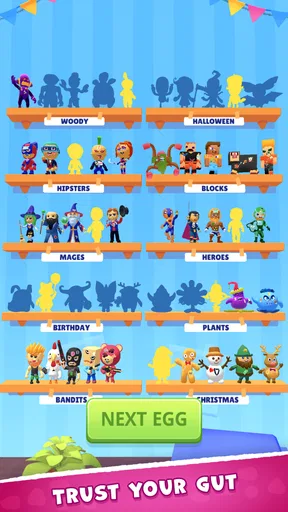
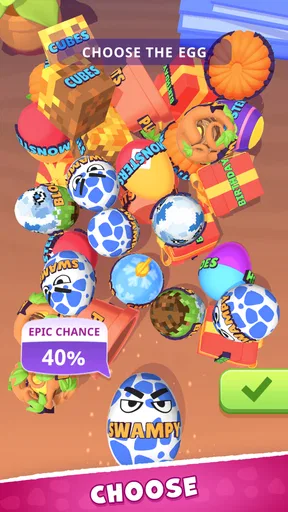
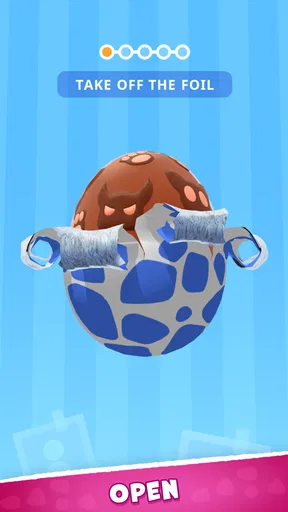
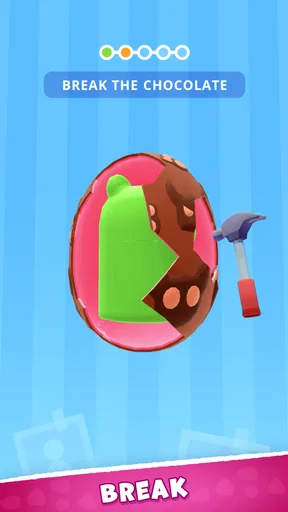
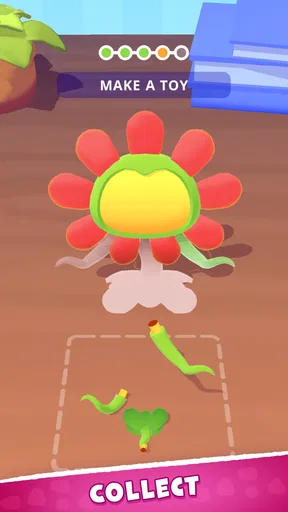
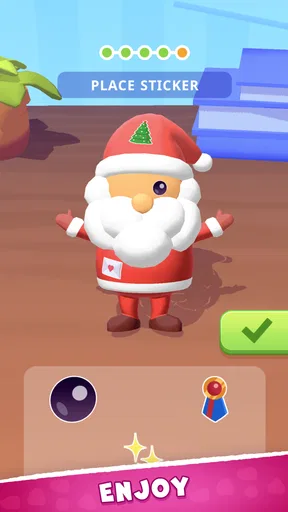
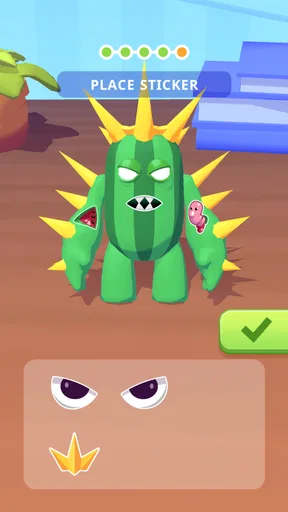
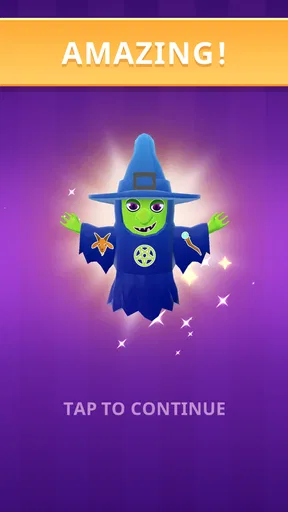
Our Review of Super Toy 3D
 Analysis by Appyee
Super Toy 3D is the kind of casual game I open when I want a small, uncomplicated distraction rather than a deep challenge. The central idea is immediately clear: I work through toy-like objects, remove their wrapping, crack open a chocolate egg, and discover what is hidden inside. That simple loop gives each short session a visible goal, and I never need a long tutorial or a complicated set of rules before getting started.
After spending time with it, I see the appeal. The game turns a familiar surprise into a sequence of light interactions, so progress is easy to understand even when I only have a few minutes. It is free to download, suitable for Everyone, and made by SayGames Ltd. Its casual design is aimed at quick entertainment, not at players looking for a demanding puzzle system or a long-form adventure.
How the first goals make the game easy to enter
The strongest part of the opening is its clarity. I am not asked to study a map, choose a complicated character build, or remember a large set of objectives. The immediate task is simply to handle the object in front of me and reach the surprise inside. That gives the first moments a satisfying rhythm: identify what needs to be peeled, interact with it, and wait for the reveal.
That early goal works because it combines action with curiosity. The reward is not only finishing the current step; it is also seeing what the chocolate egg contains. For younger players, that sense of discovery is easy to understand. For adults, it can work as a brief sensory break, especially when I want something less mentally demanding than a traditional puzzle game.
I also appreciate that the premise does not overload the screen with instructions. The game’s short description, “Super Toy 3D,” is minimal, but the play itself communicates the idea quickly. I can understand the purpose through the object in front of me rather than through long explanations. That is an important advantage for a casual title designed to be picked up without preparation.
The first goals are therefore effective, but they are also deliberately modest. There is no strong narrative hook pushing me toward a dramatic destination, and the attraction depends on whether I enjoy the repeated anticipation of opening and discovering. If I need a story, a competitive target, or a clear long-term mission from the first minute, this will feel too light.
Why the reveal loop is more important than the toy itself
The hidden item gives the interaction a reason to continue. Peeling wrapping on its own would become repetitive quickly, but the reveal adds a small question to every completed object. I found that this works best when I treat each round as a short reset rather than expecting a major achievement. The pleasure comes from completing the tiny ritual, not from mastering a complicated technique.
One useful way to play is to use the game as a transition activity. I might open it while waiting for an appointment, taking a short break from work, or winding down before putting my phone away. Because the objective is so immediate, I do not need to remember a complicated plan after closing the app. That makes it more convenient than many casual games that punish interruptions by leaving me lost when I return.
At the same time, the simplicity means the game depends heavily on presentation and pacing. If the reveal does not feel fresh to me, there is little else to compensate. Players who enjoy collecting, building, or solving increasingly complex problems may find that the central loop offers less variety than they want.
Progress signals and the feeling of moving forward
Super Toy 3D communicates progress through completion itself. Finishing the wrapping and reaching the egg creates a small but understandable signal that I have moved ahead. The sequence of objects gives the session direction, even without the kind of elaborate progression structure found in larger games.
I would describe this as immediate progress rather than strategic progression. I am usually focused on the object currently on screen, not on planning several stages ahead. That makes the game approachable, but it also limits the sense of ownership. I am completing the next activity rather than shaping a personal route through a larger system.
This distinction matters when comparing it with other casual games. A match-three title may give me a board to optimize, a score to beat, and a collection of boosters to manage. A runner may make distance, timing, and high scores the main motivation. Super Toy 3D chooses a gentler form of advancement: the pleasure of completing a tactile-looking task and reaching the surprise at its end.
For me, that makes the progress easy to follow but not especially deep. I never felt blocked by a confusing objective, which is a genuine strength. However, I also did not have the same reason to return that I would have in a game built around personal bests, strategic upgrades, or increasingly demanding puzzles.
Small habits that make the loop feel better
I get more from the game when I avoid rushing through the interaction. The wrapping and egg are the focus, so treating the movement as a short, deliberate routine makes the reveal feel more complete. This is not a skill tip in the traditional sense; it is a pacing choice. If I tap through everything as quickly as possible, the experience can feel like a sequence of chores. If I let each step register, the toy-opening fantasy has more room to work.
Another practical approach is to use short sessions instead of expecting a long play period. The game is better suited to several small visits than to an extended sitting where repetition becomes obvious. That is a useful trade-off: the same simplicity that makes it convenient during spare moments can make a long session feel thin.
I would also keep expectations realistic about what progress means here. Completing more objects can be satisfying, but I would not install this expecting a rich collection-management game or a detailed toy universe. The visible advancement is part of the rhythm, not a replacement for deeper systems.
Difficulty, pacing, and the limits of a gentle challenge
The game’s challenge is intentionally approachable. Its appeal comes from performing the interaction and discovering the result, not from overcoming a punishing obstacle. That makes it a comfortable choice for players who dislike stressful timers, complex controls, or repeated failure.
In my experience, this gentle approach supports the first part of a session very well. I can settle into the routine without feeling that the game is testing my reflexes. It is also appropriate for an Everyone-rated audience because the concept is easy to grasp and the tone is playful rather than intense.
The trade-off is that a soft difficulty curve may not provide enough tension for players who want a strong sense of mastery. Casual does not have to mean shallow, but here the main satisfaction comes from the sequence of actions and the reveal. If later moments do not introduce enough variation for my personal taste, the game can start to feel predictable even though it remains pleasant.
This is where it differs from the usual alternatives. A conventional puzzle game often increases pressure by adding new rules, tighter arrangements, or more demanding decisions. A reflex game may ask me to react faster over time. Super Toy 3D is less about proving that I have improved and more about repeating a relaxing interaction with a new object or outcome.
That makes the pacing suitable for a child who wants an easy-to-follow activity, a casual player who prefers low-pressure entertainment, or an adult looking for a few quiet minutes. It is less suitable for someone who measures value by challenge depth, difficult levels, or a competitive leaderboard.
Where the pacing can lose momentum
The same loop that makes the opening welcoming can eventually expose the game’s narrow focus. Once I understand the basic rhythm, the surprise at the end has to carry much of the motivation. If I am not especially interested in the reveal, the actions before it may not be enough to keep me engaged.
I also think the game works better when I accept pauses between sessions. Playing continuously can make the repeated structure more noticeable, while returning later restores some of the small anticipation. This is a realistic limitation rather than a flaw that affects everyone: players who enjoy repetitive, soothing routines may be perfectly happy, while players seeking constant novelty may move on quickly.
The pacing also means that this is not the title I would choose for a group of friends wanting a shared contest. It is primarily an individual, low-pressure activity. For social play, a party game or competitive casual title would offer clearer reasons to compare results and keep everyone involved.
Retention pressure, purchases, and everyday suitability
Because the game is free, it is easy to try without making a commitment. That lowers the barrier for someone who is curious about the toy-opening concept. The store presence is substantial, with over 50 million installs and an average rating of 4.3 from around 365 thousand ratings, so it has clearly reached a broad casual audience.
There are in-app purchases priced at $3.99 per item. I would treat that as a reason to pay attention rather than an automatic negative. A free casual game can be worthwhile if the basic loop already gives me enough entertainment, but I prefer to decide whether the repeated reveals justify any optional spending after trying it for myself. I would not purchase anything simply because I felt rushed to keep up.
For a parent considering it for a child, the Everyone rating makes the content approachable, but the free-to-start model still deserves ordinary supervision around purchases. The important practical step is to make sure the device’s purchase controls match the child’s age and independence. The game’s simplicity may make it easy for a child to use, but that does not remove the need for sensible account settings.
For my own daily use, the best scenario is a short waiting period. I can play a little while standing in line or between errands, complete a small objective, and stop without losing a complicated chain of progress. It is also a reasonable wind-down option because the activity does not demand intense concentration. I would avoid using it when I need a meaningful mental workout, though; it is more like a digital fidget activity than a brain-training session.
The retention pressure is therefore gentle but limited. Curiosity may bring me back, and the next object can provide a small reason to continue. Yet the game does not replace the stronger long-term hooks of collection games, score-chasing games, or puzzle titles with expanding mechanics. Whether that is a weakness depends on what I want from a mobile game.
Device fit and practical expectations
The game runs on Android 8.0 or later, which covers a wide range of devices still in everyday use. I would still consider the age and performance of a particular phone before recommending any mobile game, especially if the device is older or shared among several users. The listed current version is 1.5.42, so keeping the app updated is the sensible way to get the intended release of the experience.
I would not choose it as a substitute for a console-style game. Its strength is convenience: quick access, simple interaction, and an objective that does not require a long uninterrupted session. If I want a richer world, more meaningful decisions, or a challenge that grows substantially, I would look elsewhere in the casual category or move to a puzzle, simulation, or adventure game with stronger long-term structure.
One less obvious advantage is that the game can serve different attention levels. I can play actively when I want to focus on the opening sequence, or use it as a very light distraction when I have little energy. That flexibility is valuable, but it also explains why some players may find it underwhelming: the game is designed to occupy a small amount of attention, not to command all of it.
My progression verdict after looking past the first surprise
Super Toy 3D succeeds when its goals stay small, visible, and satisfying. The wrapping gives me an immediate task, the chocolate egg provides anticipation, and the hidden toy supplies the moment of completion. The progression is easy to understand because I am always moving from an unfinished object toward its reveal.
Its difficulty and pacing are deliberately mild. That makes it welcoming, family-friendly, and useful for short breaks, but it also means that the game may not develop into a demanding challenge. I would recommend it to someone who enjoys simple discovery loops and tactile-feeling interactions. I would skip it in favor of a deeper puzzle or competitive casual game if I needed strategic decisions, measurable mastery, or a strong reason to play for a long time.
My honest recommendation is to approach Super Toy 3D as a compact relaxation game rather than a full progression adventure. Try it when you want an uncomplicated activity, and judge it by how much enjoyment you get from the repeated opening ritual. The free entry makes that test easy, while the optional $3.99 items are best considered only after the basic experience has earned your interest.
In the end, the game’s appeal is narrow but clear. It does not need complicated systems to deliver a small moment of curiosity, and that is exactly why it can work during an ordinary day. Its best feature is the clean connection between action, anticipation, and reveal. As long as I want that gentle loop—and do not expect a constantly evolving challenge—it is an easy casual game to keep available for brief, low-pressure breaks.
Verdict
Strengths of Super Toy 3D
- Simple controls make it easy for casual players to pick up.
- Short levels are convenient for quick gaming sessions.
- Bright 3D visuals create a cheerful, toy-like atmosphere.
- Different toy-based tasks help keep the gameplay varied.
- Progression provides a clear reason to continue playing.
Limitations of Super Toy 3D
- Gameplay may feel repetitive after several levels.
- Some challenges offer limited depth for experienced players.
- Ads may interrupt play, depending on the version and device.
- The game can become less engaging once all mechanics are familiar.
- Performance may vary on older phones or tablets.
Other Releases by SayGames Ltd
View All
Turbo Stars - Rival Racing
Racing4.6

Johnny Trigger: Action Shooter
Action4.6

DOP 4: Draw One Part
Puzzle4.4

DOP: Draw One Part
Puzzle4.4
Similar Picks in This Category
View All
My Talking Angela
Outfit7 Limited4.2

My Talking Tom
Outfit7 Limited4.3

Pou
Zakeh4.2

My Talking Tom 2: Pet Game
Outfit7 Limited4.3

Candy Crush Saga
King4.6

Bridge Race
Supersonic Studios LTD4.1
Frequently Asked Questions
What is Super Toy 3D, and how does the gameplay work?
Super Toy 3D is a casual mobile game focused on unpacking, organizing, and assembling colorful toy-themed objects. Each level usually presents a small interactive task, such as opening packages, placing items correctly, or completing a miniature scene. The controls are designed for touchscreens, so the experience is easy to understand and suitable for short play sessions, although later stages may require more attention and precise actions.
Is Super Toy 3D free to download and play?
Super Toy 3D can generally be downloaded without an upfront purchase, but the free version may include advertising, optional in-app purchases, or both. Ads can appear between levels or during other parts of the game, while purchases may offer extra content or help remove advertising. Before downloading, check the current store listing because pricing, available purchases, and monetization features can vary by device and region.
Does Super Toy 3D require an internet connection?
The main gameplay in Super Toy 3D may work without a constant internet connection, which makes it convenient for playing while traveling or when mobile data is unavailable. However, an internet connection may still be needed for advertisements, optional online features, updates, or restoring purchases. Offline availability can also change after an update, so it is worth testing the game once before relying on it without Wi-Fi.
Is Super Toy 3D suitable for children?
Super Toy 3D uses bright visuals, simple touch controls, and toy-related activities that may appeal to children and casual players. Nevertheless, parents should review the game’s age rating, advertising practices, and in-app purchase settings before allowing unsupervised play. Some levels may also contain frequent ads or prompts to buy optional items. Using parental controls and disabling unauthorized purchases is recommended on shared devices.
What devices are compatible with Super Toy 3D, and does it need much storage?
Compatibility depends on the version available through the Google Play Store or Apple App Store, including the required Android or iOS version and supported device architecture. The initial download is usually manageable for a casual game, but additional data, updates, and cached advertisements may use more storage over time. Check the official store page for the latest requirements and keep free space available for smooth installation and updates.
Play our best games!


